






On this page
Tournaments and Danish players
| Tour | Tournament | Where | Dates |
|---|---|---|---|
| ATP | Nitto ATP Finals | Inalpi Arena, Turin, Italy | Sun 15 Nov – Mon 23 Nov |
| WTA | LP Open by IND | Colina, Chile | Sun 15 Nov – Mon 23 Nov |
What this data actually shows
The calendar here follows 1 ATP events and 1 WTA events. You can also browse 17 completed matches. Choose the tournament first, then check the round and surface: a player’s overall ranking does not describe every type of court equally.
Own calculation · source snapshot: 17 November 2026

| Tour | Player | Rank | Points |
|---|---|---|---|
| ATP | Elmer Møller | 149 | 386 |
| WTA | Clara Tauson | 58 | 1,074 |
Danish players in the top 150 of the ATP and WTA rankings.
Choose the tennis information you actually need
You can approach tennis through a Danish player, the week's tournaments, a ranking or a match already underway. Start with the question. Today's schedule is the right place to establish who plays this evening; results and rankings belong together when assessing a season. A broad tournament overview helps you find the context without confirming one player's next start. Choosing the question first prevents a useful summary from becoming an assumed answer about every part of the sport.
Read the tournament and player sections here with their displayed dates. A heading about this week cannot make an older result new, and an empty tournament selection does not establish that no tennis is being played. Check the year, category and period before continuing. For one player, match the name to the tournament and discipline. A familiar player's photograph beside an event is not an entry confirmation, just as a previous appearance does not establish participation in its next edition.
The most direct routes are tennis today for the daily programme, live tennis scores for recorded match outcomes and tennis rankings for positions and points. Tennis tournaments provides a broader calendar overview. Choose according to the missing information instead of expecting one list to act simultaneously as a schedule, match report and complete assessment of every player in the competition.
- Who plays today?Date, opponent and court order
- How did the match finish?Set scores and completion type
- Where is the player ranked?The dated ranking
- Which event am I following?Calendar and tournament
ATP, WTA and ITF cover different parts of tennis
ATP and WTA are useful starting points for following the men's and women's professional tours respectively. ITF's overview also includes international men's and women's events, juniors, wheelchair tennis and national-team competitions. A narrow ATP and WTA selection therefore need not contain every Danish professional. If a name is missing, the explanation can be level or category. Absence from one field is not evidence that somebody has ended a career or stopped competing throughout the sport.
Singles and doubles have separate fields and rankings. A doubles side contains two players, and a doubles specialist's results should be assessed in that discipline. A high singles position and a high doubles position are not directly comparable numbers in one shared list. Mixed doubles also requires the partner and event format. Read the category attached to a figure before using it to compare players or identify the next assignment of a particular Danish participant.
The four Grand Slams bring several categories together at one venue without creating one combined draw. Men's singles, women's singles, doubles, juniors and wheelchair events follow their own competitions. A ticket session or television block can contain more than one category. The shared tournament name does not remove the need to choose a discipline. When sharing a result, include category and edition alongside the event, particularly where several Danish players are involved in different parts of the programme.
Read a calendar through edition, level and surface
A calendar describes the tournament period. The daily order of play describes what happens on individual courts. The event's opening date is therefore not necessarily a particular player's first appearance, while qualifying can precede the main draw. Select the relevant stage if you want to follow somebody from the beginning. A tournament being underway also does not mean that every player remaining in the draw plays on the day you happen to open its calendar entry.
WTA's official calendar provides year, surface and level filters alongside upcoming and completed events. These choices answer different questions: hard court is a surface selection, whereas WTA 1000 identifies a tournament category. Numbers such as 250, 500 and 1000 are event designations, rather than spectator counts or the number of players in a draw. Inspect the actual field and regulations where you need more detail than the event's broad position on the tour.
A familiar event can change its name through sponsorship or across historical editions. Cincinnati Open and Western & Southern Open illustrate why an older name can lead into the same tournament's history. Retain the year when comparing archives and identify the ATP or WTA draw. A previous champions list supplies history without confirming today's draw. The same venue can contain parallel competitions whose fields and arrangements differ from those in the edition you originally followed.
Four Grand Slams across three broad surface types
ITF's official Grand Slam overview places the Australian Open in Melbourne, Roland Garros in Paris, Wimbledon in London and the US Open in New York. In the current broad division, the Australian Open and US Open use hard courts, Roland Garros uses clay and Wimbledon uses grass. This is geographical and sporting orientation, rather than an announcement of new match dates. Consult the individual event's calendar for the edition you intend to follow.
Surface matters to a comparison without explaining a result completely. Two hard-court tournaments can have different conditions, and outdoor weather adds another consideration. Supplement overall season results with performances in a relevant setting. One clay-court victory does not establish that somebody will now win every match on clay. Inspect opponents, level, period and whether the matches were completed. A surface label is a useful way to narrow a question, rather than a substitute for asking what actually happened.
Continue to the individual guides for the Australian Open, Roland Garros, Wimbledon and US Open. Keep distinguishing the edition, today's play and an older result. A page carrying a tournament's name does not by itself establish whether you are reading a calendar, draw, live match state or historical summary. Identify that role before using a figure to explain a current sporting situation.
| Tournament | City | Surface |
|---|---|---|
| Australian Open | Melbourne | Hardcourt |
| Roland Garros | Paris | Clay |
| Wimbledon | London | Grass |
| US Open | New York | Hardcourt |
A ranking is a points account, not a guaranteed winner
Rankings combine results under the relevant tour's rules. WTA describes its ordinary ranking as a rolling fifty-two-week system. That does not mean every player has entered the same number of events or every result counts identically. Tournament level, round reached and rules about countable results matter. Use a dated points breakdown for a particular calculation instead of adding every number on a career page and treating the sum as the player's official current total.
A position is relative: it places the player against others on the selected list. Someone can earn points without moving up if competitors improve more. A position can also rise without another win when other players lose points. An upward arrow is consequently not a match result. Read the date, points total and movement together before explaining development. A rise of several places needs context rather than an invented sequence of victories that the ranking itself does not record.
In a deliberately simplified example, an imaginary account starts at 2,000 points. If 250 countable points expire and 400 new points are eligible to count, the total becomes 2,150: 2,000 minus 250 plus 400. The assumption is that both changes count without other adjustments. This is not a real player's calculation or a promise of a position. Establishing the position also requires other players' totals and the tour's full counting rules.
An official ranking and a provisional live calculation can display different totals. ATP's explanation of live rankings describes how points being defended can already have been removed from the provisional view. Do not compare different list types as though they were the same publication. Read the date and explanation. A projected maximum for winning the title is a scenario, rather than points already earned, and one ongoing match need not determine the next official position independently of other results.
| Step | Calculation |
|---|---|
| Start | 2,000 |
| Expiry | 2,000 − 250 = 1,750 |
| New countable points | 1,750 + 400 = 2,150 |
Year-to-date figures and career figures answer different questions
A player profile can contain both year-to-date and career statistics. Titles, wins, losses and prize money need the selected period. Zero titles in the current year does not mean zero titles across a career. WTA player profiles, for example, distinguish the year's view from career information. Check that choice before sharing a number or comparing two players whose records might appear dramatically different in a screenshot simply because the pages use different time periods.
Ranking points and prize money are also different quantities. A larger payment cannot automatically be converted into more ranking points, while a dollar figure is not Danish take-home income after expenses and tax. For sporting comparison, begin with category and results. Financial figures need their own period and definition. A prize-money field does not independently explain form, a player's next opponent or the chance of winning a forthcoming contest. It should remain an economic statistic with its original scope.
Retain the denominator when comparing winning percentages. An invented selection containing twelve wins and eight defeats gives twelve out of twenty, or sixty per cent. It describes those recorded matches. It cannot be compared directly with another surface, an entire career or a selection excluding interrupted contests without explaining the difference. A high percentage without scope can conceal a very small sample. First establish which matches belong in the comparison, then decide what the percentage can reasonably illustrate.
Follow Danish players through the appropriate sources
Holger Rune and Clara Tauson are familiar Danish names, but Danish tennis includes more players and more levels. Find the person's actual event and category first. A club affiliation or nationality marker does not confirm a match this evening. If the player is absent from the largest fields, a Challenger, ITF or qualifying event may provide the relevant route. Use a confirmed programme instead of interpreting absence from a prominent tournament list as absence from the sport altogether.
On Clara Tauson's official WTA profile, check the period and category attached to the information. A profile, entry, draw and order of play answer different questions. The profile identifies the player; the draw shows the route through the event; the order of play locates a particular fixture. To establish the next opponent and start, continue beyond the biography. A portrait or old highlight clip does not prove the next assignment.
Apply the same distinction to news about absence. A player missing from one list is not automatically injured or out for the season. Attach a confirmed withdrawal to the event named in the announcement. Leave its cause open if no explanation has been published. Use a dated player, team or organiser statement to establish whether there is a new specific fact, rather than making a diagnosis from an empty calendar or treating an earlier injury report as a permanent status.
- ProfileIdentity and selected period
- DrawOpponent and tournament route
- Daily order of playActual date, court and start designation
National teams, juniors and doubles add other perspectives
Davis Cup and Billie Jean King Cup are national-team competitions, with individual matches determined by the applicable format. The country's overall tie result is therefore not the same as one player's singles score. Check the edition and match line-up when following Denmark. Selection and actual participation are separate facts. Conversely, players from the same country entering an ordinary tour tournament do not automatically form a national-team squad or share one combined result for that week.
Read junior achievements within their own age category. A junior title is not a senior Grand Slam title, and junior and senior players have separate rankings. Wheelchair tennis likewise needs its competition and classification. Precision does not diminish those achievements; it makes comparison understandable. This matters particularly where an event page uses shared imagery or a result circulates without the category that gives it meaning. Preserve the original category instead of silently substituting the better-known senior singles competition.
A doubles player's next fixture needs both partner names. The partnership can differ from the previous tournament, so earlier success with one partner does not establish the current combination. Check the actual draw. When comparing a pair's results, keep the period and partnership consistent. That is different from selecting the two highest individual singles rankings and declaring them the strongest confirmed pair in a doubles field. Entries establish who is actually playing together; individual reputation does not establish an entry.
Turn a result into a reasonable sporting assessment
A final score starts an assessment without telling the whole match story. Two sets to love can contain two tight tie-breaks or two much clearer sets. A retirement or walkover must remain attached where the fixture did not finish normally. The live tennis explanation covers those distinctions. This overview's main task is to lead to the right match, period and category before a performance is assessed, rather than reconstructing play from an isolated winner's name.
A head-to-head record is another bounded historical selection. Establish whether it covers tour matches, all levels, a specific surface or interrupted contests. Three previous meetings are not three independent proofs of the next outcome: they may be separated by years and played in different conditions. Opposition, recent performances and format can provide relevant background without removing uncertainty. Keep that background distinct from a claim that an old score determines a future result or guarantees how a new match will develop.
Separate the tennis programme from viewing access
After identifying the match, check its actual broadcast separately. Tour rights do not establish that one court or player receives uninterrupted coverage. Use today's sport on Danish television for the wider guide and today's tennis programme for court order and timing. Confirm the provider's current entitlement for your package and location before purchasing. The sporting fixture and your ability to watch its pictures remain separate checks, even when both appear on the same event page.
A streaming subscription, stadium ticket and free score listing are different products. None proves entitlement to the others. For attendance, session, court and admission conditions need to fit the actual day. For following scores, a dated match record serves another purpose. Choose according to the need instead of paying for an expectation that a familiar tournament name cannot fulfil on its own. A ticket session in particular should not be interpreted as a promise that one named player will reach it.
Keep a reference that remains meaningful afterwards
A useful tennis reference contains edition, tournament, category and player names. For a result, add final status and set scores; for a plan, add date, court and the type of start time. These distinctions make saved information more durable than a single screen containing a logo. After the tournament, you can still identify whether you saved a possible match, confirmed programme or completed outcome, instead of trying to reconstruct its role from an undated screenshot.
Choose one overview as your starting point and open detailed pages according to the question. The calendar provides the season's framework, rankings explain the points account, profiles identify people and match records describe particular contests. Check the displayed dates when information changes. You can then follow tennis across tournaments and Danish participants without combining an old result, provisional position and unconfirmed next match into one misleading claim about what the player is doing now.
Where can I find today’s tennis matches?
Use tennis today for the displayed date, opponent and court order. A calendar or profile does not independently confirm a fixture today.
Do ATP and WTA share one ranking?
No. Retain tour and category; singles and doubles rankings are separate too.
Why can a ranking rise without another win?
Position is relative to other players. Expiring points and changes to other totals can alter the order.
Does zero titles on a profile mean zero career titles?
Not necessarily. Check whether the selected view covers the current year or the complete career.
Does a photograph or ranking confirm the next match?
No. Use the actual draw and daily official order of play for the opponent and schedule.
Are junior and senior titles the same category?
No. Preserve age group and discipline; a junior title is not a senior Grand Slam title.
Explore Tennis
Tennis and tournaments (24)
- Tennis Today and on TV
- Live Tennis Scores and Results
- Tennis Rankings – ATP and WTA
- Djokovic tennis
- Tennis tournament calendar
- US Open tennis
- Tennis rules
- Tennis French Open
- Wimbledon today
- Tennis Australian Open
- Flashscore tennis
- Western and Southern Open tennis
- Madrid Open tennis
- tennis results
- Monte Carlo Masters tennis
- ATP tennis Rome
- Sofascore tennis
- ATP tennis Rome results
- Monte Carlo tennis tickets
- women’s tennis results
- Cincinnati tennis results
- Cincinnati tennis schedule
- Rome tennis live scores
- Rome tennis schedule
Choose an athlete
Choose a Danish athlete to see their profile, next event and selected dated results. Older achievements are labelled as archive material.
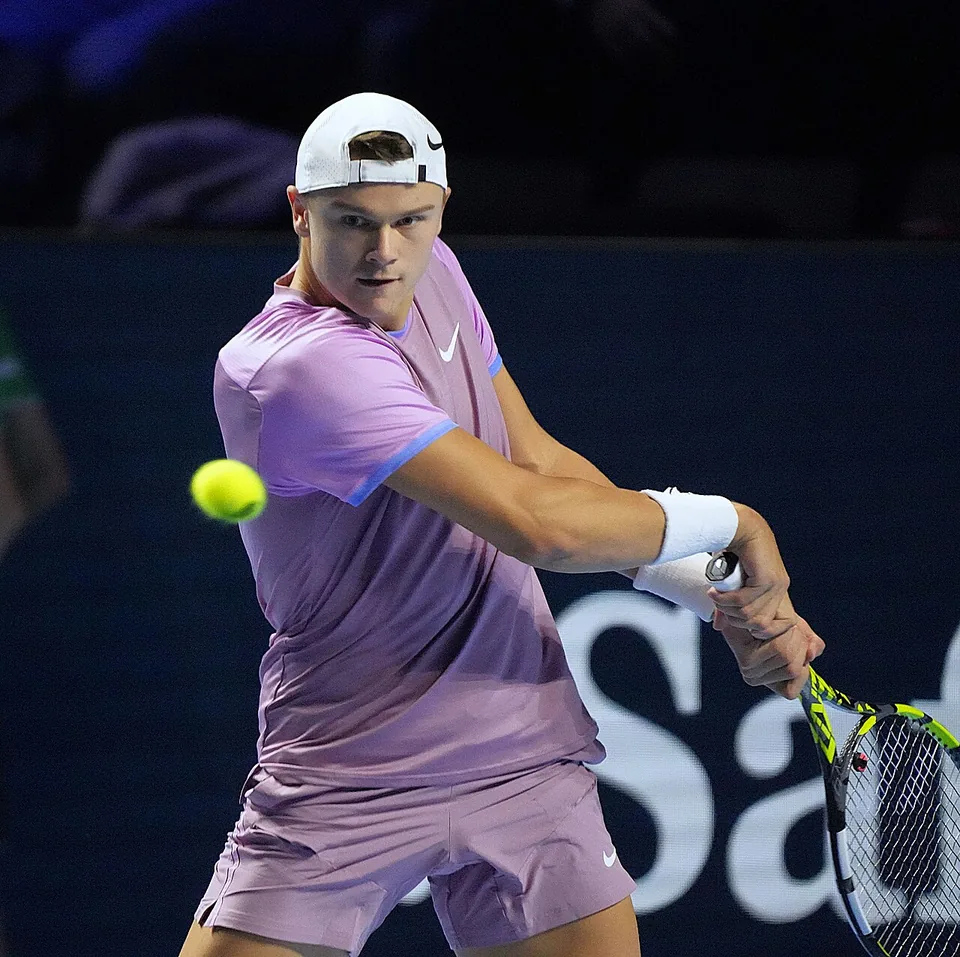

Holger Rune
Tennis · Men’s singles · ATP
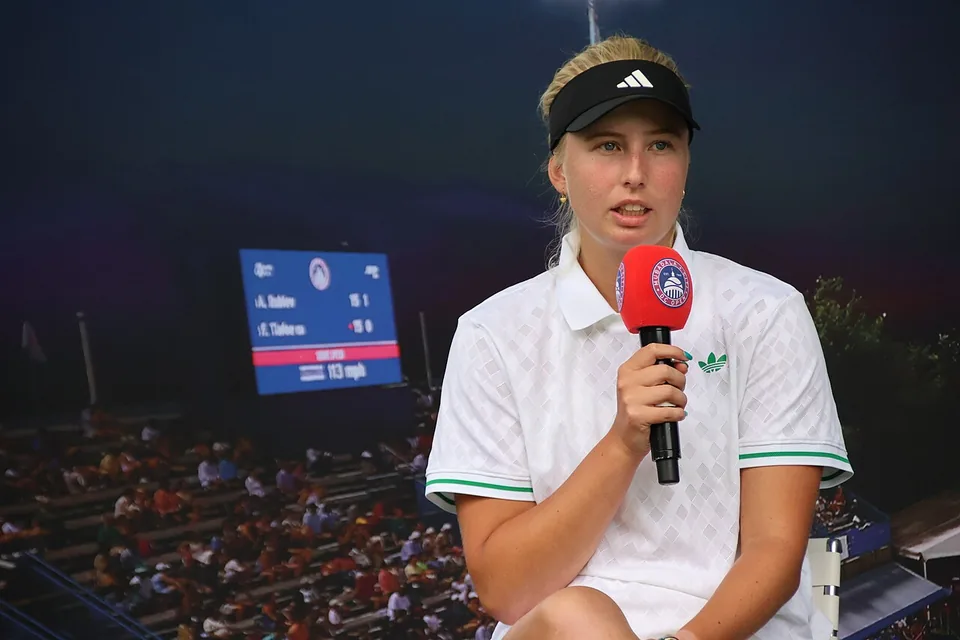

Clara Tauson
Tennis · Women’s singles · WTA

Max Petershans, CC BY-SA 4.0, Wikimedia Commons · CC BY-SA 4.0

Mathias Gidsel
Handball · Right back · Füchse Berlin


Anders Antonsen
Badminton · Men’s singles · BWF
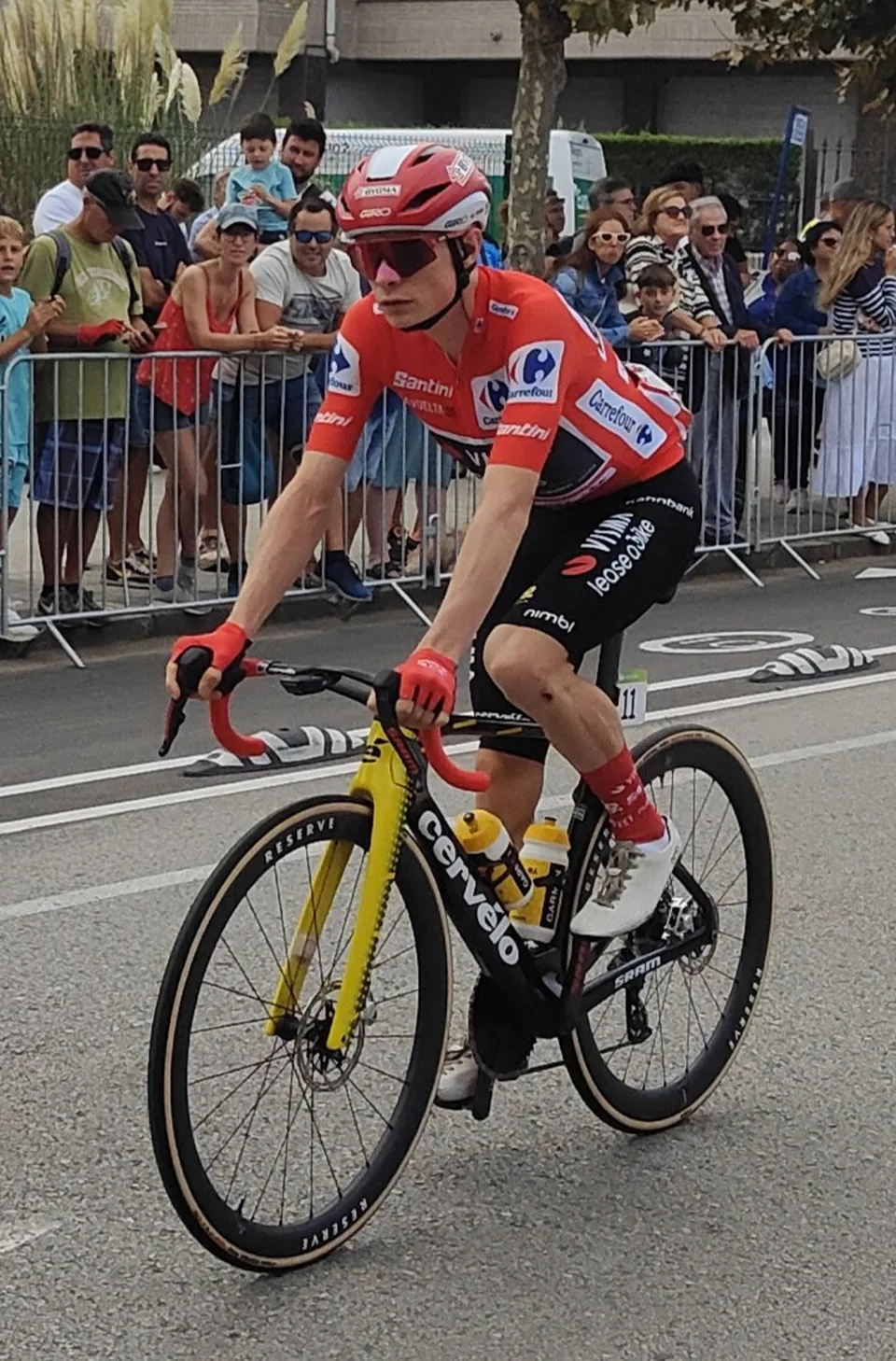

Jonas Vingegaard
Cycling · Road cycling · Team Visma | Lease a Bike


Pernille Harder
Football · Forward · FC Bayern München