
On this page
Today’s tennis matches
Check today’s matches with the ATP and WTA.
ATP · Nitto ATP Finals (Inalpi Arena, Turin, Italy)
- Rafael Jodar – Arthur Fils 6-4 2-6 2-6
- Ben Shelton – Alexander Zverev
WTA · LP Open by IND (Colina, Chile)
- Darja Semenistaja – Irene Burillo 4-6 0-6
- Varvara Lepchenko – Nadia Podoroska 3-6 5-7
- Alicia Herrero Linana – Lucia Bronzetti 3-6 1-6
- Miriam Bulgaru – Polona Hercog 6-7 4-6
- Veronika Erjavec – Maria Lourdes Carle
- Laura Samson – Despina Papamichail
- Andrea Lazaro Garcia – Barbara Gatica
- Antonia Vergara Rivera – Fernanda Labrana
What this data actually shows
For 17 November 2026, this calendar lists 10 matches, of which 5 are marked finished. For later matches, check the court’s order of play: a preceding contest can push the start back. If your player is absent, consult the tournament schedule for qualifying or doubles coverage.
Own calculation · source snapshot: 17 November 2026

Start with the actual daily order of play
Tennis today begins with who is scheduled to play. An entry list or draw does not mean the player has a match on this particular day. Find the tournament, current date, opponent and court, then inspect the order on that court. These details provide a better basis for following a Danish player than a broad heading about the week's tennis.
This page's selection concerns the recorded singles matches in ATP and WTA main draws. It should not be read as a complete timetable for qualifying, doubles, junior competition, wheelchair tennis and every smaller tournament. If an expected match is absent, check the player's tournament and category with the organiser. Absence from a limited selection does not establish injury, withdrawal or non-participation in every event that week. It identifies a gap to investigate rather than a medical conclusion.
A Danish marker helps identify Danish participants, but it does not replace a confirmed match listing. Read the complete player name and opponent, particularly where a page also contains previous results and possible future opponents. Seeding indicates a position in the draw, not a start time. An anticipated quarter-final opponent is not a confirmed appointment before both players have progressed and the fixture has been established in the tournament's actual course.
A draw and an order of play serve different purposes
The draw describes first-round pairings and the positions later winners can occupy. The daily order of play describes what happens on particular courts that day. A player can remain in the draw without appearing in today's schedule. Use the draw for tournament context and the order of play for a viewing plan, rather than inventing a start for an unscheduled match.
Cincinnati Open's official score centre provides separate entrances for order of play and results. That is a practical example of the distinction to look for on an organiser's website. Outside the tournament period, an entrance can be empty even though the page still exists. A news story about the tournament's name or history is not an alternative daily timetable. Check the programme's actual date instead of reusing a court order from an earlier edition.
At a combined venue, ATP and WTA matches can share a court. The contest immediately before the one you want may therefore belong to another tour or category. Read the court's complete sequence instead of filtering out every name that does not interest you. A doubles match before a singles match also affects the wait. The sequence explains the practical dependency, but it does not provide a reliable fixed duration for each preceding contest.
Understand scheduled, not-before and followed-by times
A published start, a not-before time and an estimated start convey different levels of certainty. Not before sets an earliest time; it does not promise play will begin exactly then. Followed by places a match after the preceding contest on that court. An approximate time is an estimate that can move. Read the wording attached to the number instead of treating every displayed clock time as an equally firm appointment that the players have agreed to meet.
It is too absolute to say that only a court's first match can have a specified time. Later matches can also have announced starts or not-before designations. Conversely, weather or another disruption can delay even the first match. WTA's official rules use both specific starts and not-before times. For viewers, the practical task is to read the current designation and subsequent official changes, rather than applying one simple rule to every row in the programme.
In a deliberately fictional example, a match is listed not before 17:00 after another contest on the same court. If the preceding match finishes at 17:20, the next cannot begin at 17:00. Its exact new start cannot be calculated from 17:20 alone, because preparation and the players' arrival also take time. This illustrates why waiting occurs without claiming that a real fixture has been moved by a particular number of minutes or will start immediately after its predecessor.
A television block can start before your match and show other courts while you wait. If you want one specific contest, check for an individual match feed where it exists and your access includes it. A channel carrying the tournament name may prioritise another court. A delayed start on your court is therefore not automatically a mistake in the television guide: the tournament coverage can already be running while the chosen match has not begun.
- Fictional example: the next match is not before 17:00.
- The preceding match on that court ends only at 17:20.
- The next match cannot begin at 17:00. Preparation also takes time; no exact new start is calculated.
Convert the actual date into Danish time
Times labelled Danish time use Europe/Copenhagen, whereas an organiser's order of play may use local time at the venue. Check the timezone printed beside the programme before comparing them. Denmark uses standard and summer time; other countries can change their clocks on different dates or not change them at all. An offset that worked last month may therefore fail at the next event, even when the tournament city remains the same and the displayed clock looks familiar.
Use the complete date when an overseas evening match falls after midnight in Denmark. The organiser's playing day can differ from the Danish viewer's calendar day. That can explain why an expected row does not appear under the same date on both sites. Switching between Danish and English text does not, by itself, alter the match timezone. Inspect the displayed date and explanation of the times rather than assuming that the language selects your current local clock.
A general UTC example illustrates the seasonal difference: 17:00 UTC on 15 July 2026 corresponds to 19:00 in Denmark, while 18:00 UTC on 15 December also corresponds to 19:00. These are not scheduled tennis matches. The example only demonstrates why a date belongs in a conversion. For a real match, use the organiser's timezone and event date.
Distinguish qualifying, main draws and match formats
A qualifying match concerns access to the main draw, rather than automatically being the main draw's first round. A player may have competed during the preceding weekend before the part of the event covered here. To find that result, select the organiser's qualifying draw. A vacant position, a wildcard and a seed also describe different circumstances. Read those labels within the actual draw rather than treating every route into a tournament as the same sporting status.
Singles and doubles remain separate competitions even when the same player appears in both. A doubles side is a pair, so both names belong to the identity of the match. A singles withdrawal does not independently establish what happens to a separate doubles entry. Check that category's official status. Where a guide covers singles only, a doubles match can be real and relevant without appearing in that selection. The coverage boundary should not be mistaken for a contradiction.
Match format affects the interpretation of a score, rather than supplying an exact finishing time. Best of three requires two sets to win a completed match; best of five requires three. Calling a fixture men's tennis is not enough to assume a five-set format. Check the tournament and category. Grand Slams, tour events, team competitions and doubles can use different provisions, so a familiar format from one event should not be applied universally to the next.
Some doubles formats replace the deciding set with a match tie-break. That differs from a tie-break within an ordinary set. A fictional result containing two shared sets and a 10–8 match tie-break does not contain a normal third set of ten games to eight. Read the format beside the match. The particular competition's rules determine whether that method applies; it cannot be inferred simply from seeing four player names or from remembering another doubles event.
Keep sets, games and points on separate levels
A live display can show completed sets, games in the current set and points in the current game at the same time. Those levels should not be added together. In an invented contest, one player can lead by a set while the opponent leads the current set 4–2. There is no contradiction. To understand who is approaching victory, first identify the format and then separate completed sets from the one that is still being played.
A fictional final score of 6–4, 3–6, 6–2 gives the first player two sets to one. That player also won fifteen games against twelve, but sets determine this match's winner. Total games provide another description, rather than an alternative winning condition. The example explains why a large margin in one set does not automatically overturn losing two other sets. Keep the displayed score in its original sequence instead of rearranging sets to fit an expected match narrative.
A small number in brackets beside a tie-break set is not another set. It can represent points in the set's tie-break, depending on the service's notation. Read the explanation, particularly where only the losing player's tie-break points are displayed. A serving marker identifies the server, rather than the player who leads or is expected to win. Such symbols are useful supplements, but the player names, completed sets and current score remain essential to reading the match correctly.
First-serve percentages, break points and aces describe particular parts of a contest. They can provide context without establishing who wins the next set. For example, converting three of six recorded break points produces fifty per cent for that sample. It is not a calculated probability of winning the next break point. Also check whether a statistic covers the whole match or only the current set, since comparing different periods can create an apparent advantage that the figures do not support.
| Count | First player | Second player |
|---|---|---|
| First set | 6 | 4 |
| Second set | 3 | 6 |
| Third set | 6 | 2 |
| Sets won | 2 | 1 |
| Total games | 15 | 12 |
Distinguish delays, suspensions, walkovers and retirements
A delayed or suspended match has not necessarily been cancelled. Rain, light or another condition can change the day's programme. Use the organiser's status and any revised court assignment to establish whether play resumes later. A roof somewhere at the venue does not mean every court is covered or every delay disappears. A weather forecast can help with general planning, but it does not independently confirm the organiser's decision about a particular match or the time play will restart.
A walkover means the match did not begin and a participant advances without the planned contest. A retirement during a match means a player did not complete play after the match began. WTA's official glossary distinguishes those situations. They are not alternative spellings for a normal completed victory. Retain the status beside the result so that an unfinished set is not reported as an ordinary completed set, and do not describe an unplayed fixture as a full match performance.
RET in a match result is not, by itself, an announcement that a player has ended an entire career. Seek a confirmed player or tournament explanation if the reason matters. A short code does not justify diagnosing an injury or predicting how long somebody will be absent. Similarly, a withdrawal can change the opponent without establishing a particular illness. Describe the confirmed change and leave its cause open where no reliable explanation has been published.
If play stopped yesterday, today's order can list a resumption rather than a new match starting from zero. Check the preserved score and official notice. One contest can therefore appear on two Danish calendar dates without becoming two separate victories. An absent resumption time remains missing information, rather than permission to guess the next convenient slot. Follow the revised court order and check whether the match has also moved to another court before choosing a feed.
| Has play begun? | Possible recorded status | What to check |
|---|---|---|
| No | Pending, delayed, postponed or official W/O | The organiser’s specific status; no start does not automatically mean W/O |
| Yes | In progress, suspended, official RET or completed | Read status and score together; a pause does not automatically mean RET |
Tournament rights do not confirm every match broadcast
When checked on 3 November 2026, WTA's official broadcaster directory listed TV2 for Denmark. That is a route towards finding coverage, rather than proof of one player's participation or a named Danish channel for every match. Confirm the particular programme with the provider. Do not assume a WTA agreement includes every Grand Slam, junior competition or other event merely because some of the same players compete there. The tournament and the actual coverage still need separate confirmation.
A programme carrying a tournament's name may show a selected court, switch between matches or present highlights. Check the live label, participants and individual feed if you want a particular contest from the beginning. A Danish player's match can be underway without appearing in the channel block you selected. This is the difference between a sporting timetable and a broadcast timetable: one describes the competition's operation, while the other describes the coverage the broadcaster has chosen to provide.
Access must also match your package, device and current location. An account in an app does not automatically include every sports programme. Check the price, simultaneous-stream allowance and travel conditions for the particular subscription package. Check the provider's current information before purchasing. Use today's sport on Danish television if you want to compare tennis with other programmes that evening, rather than expecting a tennis draw to describe the entire television schedule.
Plan for one match without inventing a finishing time
If the chosen match follows another contest, monitor that predecessor and the next official programme update. You do not need to open every court to understand the waiting time. Save the player names and court so you can return to the same listing. A not-before time tells you when to be ready from; an estimate remains an expectation that can move. Neither guarantees the precise moment the players walk onto court or the first competitive point is played.
To follow two matches, establish whether they are consecutive on one court or simultaneous on separate courts. In the first case, the second depends on completion of the first; in the second, they can overlap despite their estimates. Decide which matters most and check whether replay access is genuinely available. No honest calculation based solely on the players' rankings supplies a certain match duration or removes the risk of overlapping play across a busy tournament venue.
A score notification can arrive before the picture because streams can be delayed. Adjust notifications to avoid learning the next point. For later viewing, open the recording directly: even a results heading or thumbnail can reveal the outcome.
Resolve missing or conflicting information carefully
Check the dates attached to the latest programme and match status. An older listing can be superseded by a later official court or time change. If the organiser has moved the match, use that newer official announcement for planning even while an older row remains open here. A useful error report includes tournament, date, player names, court and the precise discrepancy. These details identify the affected fixture more effectively than a general statement that the entire tennis schedule is wrong.
Two services can use different notation or display venue time and Danish time respectively. Examine those differences before declaring one incorrect. For a completed contest, the organiser's result is the relevant check; the next scheduled match belongs in a new order of play. A news article, ranking or player profile can supply background without confirming a start time. Use each source for the question it actually answers rather than asking a season-long ranking to identify today's court allocation.
Continue according to the information you need
This page concentrates on today's confirmed fixtures, their sequence and the route to following them. Live tennis scores helps with recorded results, while tennis rules provides more room for scoring and formats. Tennis tournaments adds the wider context of events across the calendar. Use those pages for their respective questions, rather than allowing a ranking position or old result date to replace the current daily programme.
Before choosing a broadcast, identify the players, category, date, court and type of start time. Then check the actual coverage and your access to it. Where a detail is absent, leave it unconfirmed and investigate that point with the organiser or provider. This produces a useful plan without treating an estimate as a fixed appointment or a possible opponent as a scheduled fixture. It also makes clear which part of your tennis day remains subject to change.
| Label | How to read it |
|---|---|
| Not before | No earlier than the time; play can start later |
| Followed by | After the preceding match on that court |
| Approximate | An estimate that can change |
| Resumption | Check retained score, revised date and possible court change |
Does not before promise an exact start?
No. It sets the earliest start. A preceding match, weather or another official change can delay actual play.
Can only the first match have a specified time?
No. Later matches can also have a stated or not-before start. Even the first match can be delayed. Read the actual programme designation.
Does this selection include qualifying and doubles?
It concerns recorded singles fixtures in ATP and WTA main draws. Check other categories directly with the organiser.
Does RET announce retirement from the sport?
Not by itself. In a match result, it means the player did not complete play after the match began. A career retirement needs a separate confirmed announcement.
Why can the match fall on another date in Denmark?
A timezone difference can cross midnight. Convert the actual event date from the organiser’s timezone into Europe/Copenhagen.
Do tour rights confirm coverage of a particular Danish player?
No. Confirm the player in the daily order of play, then the specific broadcast and your entitlement with the provider.
Choose a topic and next question
Tennis and tournaments
- Tennis – ATP and WTA in One Place — Find your route to tournaments, results, rankings and Danish players.
- Tennis tournament calendar — Tour, category and surface
- Live Tennis Scores and Results — Read tennis scores through sets, games, points and match status.
- Tennis rules — Points, games, sets and tie-breaks
- Djokovic tennis — Find the right Djokovic match
- Tennis Rankings – ATP and WTA — The world rankings for men and women with points and movement since last week, Danish players in the top 150 included even outside the top 30.
- Flashscore tennis — Open Flashscore for tennis scores and distinguish sets, games and points. Select ATP, WTA or doubles before comparing players and match status.
- Western and Southern Open tennis — Western & Southern Open is a former name of the Cincinnati Open. Use it to locate historical editions, but check the year and tour before treating old scores as current.
- Madrid Open tennis — Madrid Open forms part of the spring clay season. Find the correct edition, distinguish ATP and WTA, and use the order of play for a particular match instead of guessing from the event’s overall dates.
- tennis results — Read tennis results with set scores and completion status rather than only a winner’s name. Find selected confirmed results and routes to the tours’ fuller records; this selection is not a complete live service.
- tennis on TV today — Find tennis broadcasts and compare them with the day’s order of play. A long broadcast block often covers several matches and does not establish the start time of Rune, Tauson or another specific player.
- Monte Carlo Masters tennis — The Rolex Monte-Carlo Masters belongs to the ATP clay season. Distinguish the event guide, ticket choice and daily schedule so a past final does not become a future fixture.
- ATP tennis Rome — Rome’s ATP event is the Internazionali BNL d’Italia. Find the edition, results and order of play while distinguishing men’s singles, doubles and the separate women’s event.
- Sofascore tennis — Use Sofascore for tennis listings and read match statistics in context. Serve, return and match status together tell you more than an isolated percentage or an old head-to-head win.
- ATP tennis Rome results — See confirmed closing-round ATP Rome 2026 matches with date, round and set scores. This selection covers men’s singles, not WTA results or a current live score.
- Monte Carlo tennis tickets — Choose a Monte-Carlo ticket by date, court and admission type. Grounds admission does not necessarily include a reserved main-court seat or a particular player’s match.
- women’s tennis results — Follow women’s tennis with the WTA as the starting point, separating singles, doubles and team events. Selected Danish achievements carry dates and are not automatically today’s results.
- Cincinnati tennis results — See a confirmed selection from Cincinnati 2026. The final carries its date and draw category; ATP men’s singles must not be confused with the WTA final or an older Western & Southern Open edition.
- Cincinnati tennis schedule — Find Cincinnati’s schedule by edition and match day. The 2026 event has finished, so its calendar is historical rather than a confirmed match time for the next edition.
- Rome tennis live scores — Rome does not run all year. Open an in-play score when a match is actually underway; outside the event, use ATP for completed results and the next programme.
- Rome tennis schedule — Treat Rome’s event dates and its daily order of play as separate information. A player’s place in the draw does not by itself establish the date, court or exact start time.
Choose an athlete
Choose a Danish athlete to see their profile, next event and selected dated results. Older achievements are labelled as archive material.


Holger Rune
Tennis · Men’s singles · ATP
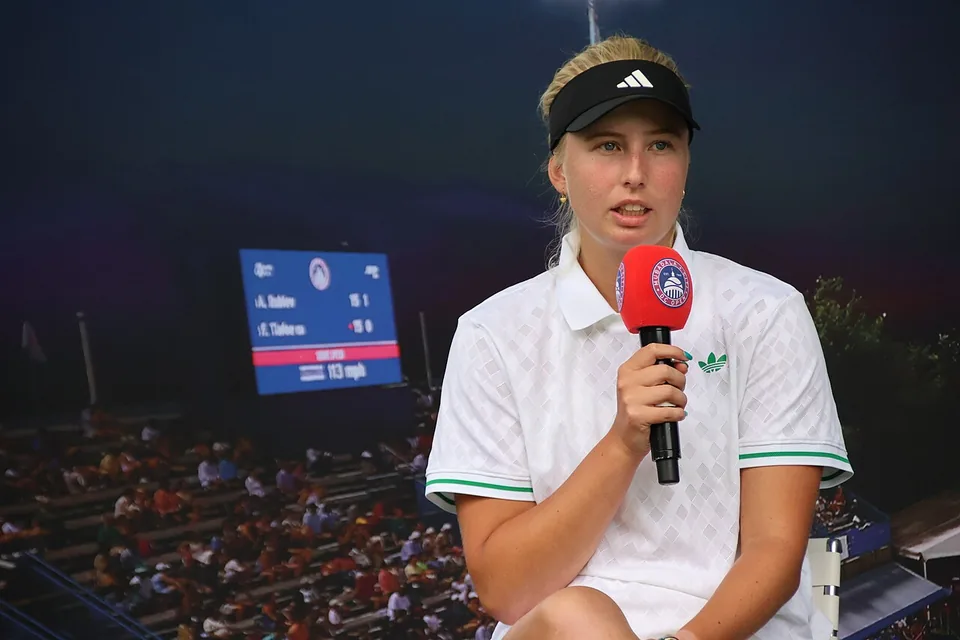

Clara Tauson
Tennis · Women’s singles · WTA

Max Petershans, CC BY-SA 4.0, Wikimedia Commons · CC BY-SA 4.0

Mathias Gidsel
Handball · Right back · Füchse Berlin


Anders Antonsen
Badminton · Men’s singles · BWF


Jonas Vingegaard
Cycling · Road cycling · Team Visma | Lease a Bike


Pernille Harder
Football · Forward · FC Bayern München